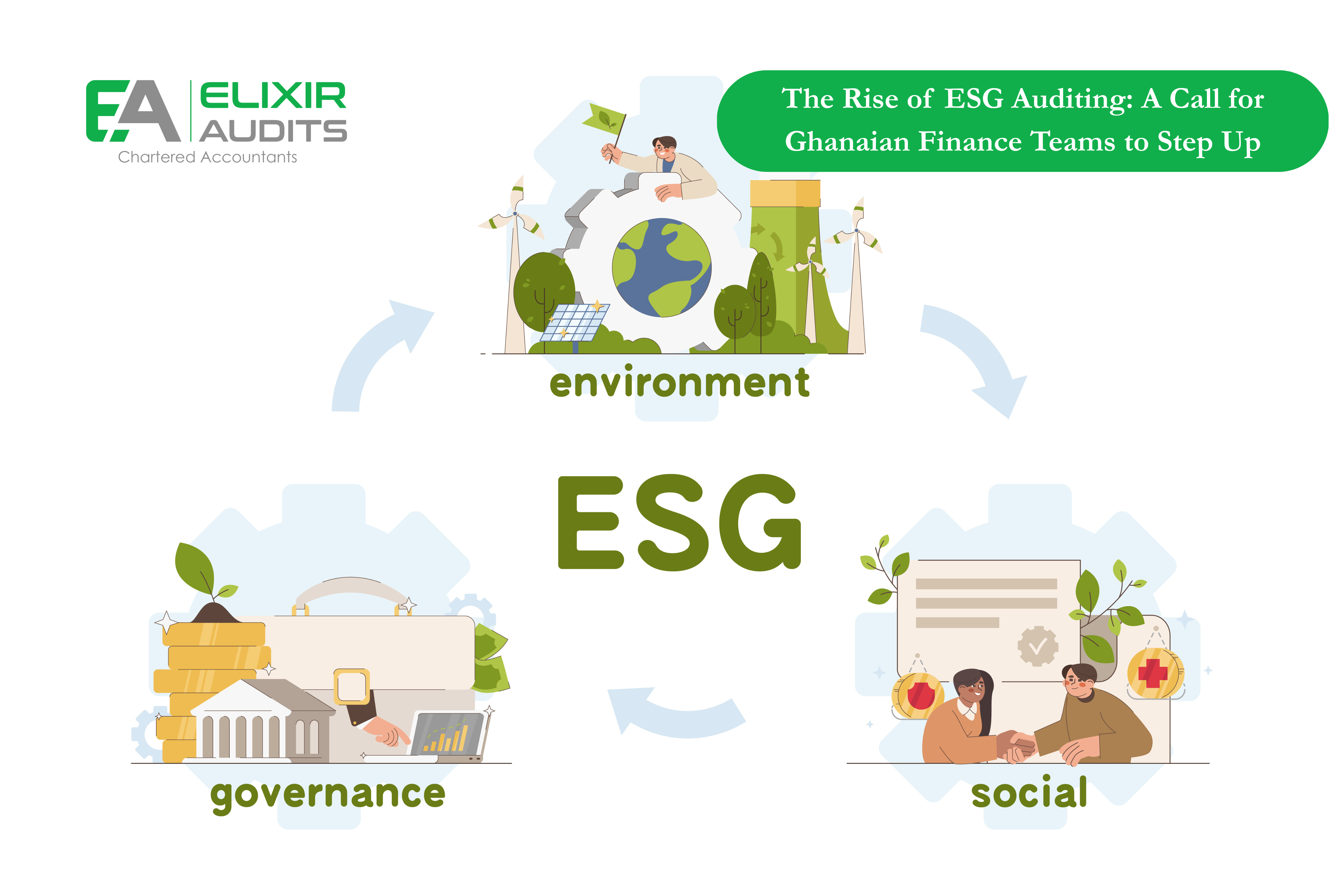
In today’s business environment, strong profits are no longer enough. Stakeholders now expect companies in Ghana to demonstrate how they impact the environment, support their communities, and ensure transparent governance.
That is where Environmental, Social, and Governance (ESG) comes in. As global and local expectations rise, finance teams must look beyond the ledger and step confidently into this emerging space.
Ghana’s ESG Shift Is Already Underway
From the Bank of Ghana’s Sustainable Banking Principles to ESG disclosure expectations from the Ghana Stock Exchange, the momentum is building. Exporters and multinationals in sectors like mining, cocoa, finance, and energy are already under pressure.
If your company is targeting foreign investment or public contracts, ESG transparency is quickly becoming a basic requirement.
Finance Cannot Be Left Behind
Traditionally, ESG reporting may have sat with HR or CSR teams. But today, finance managers are expected to do more. They must:
-
Track and report ESG-related data with the same precision as financials
-
Participate in setting realistic sustainability targets
-
Provide financial insight into ESG issues such as cost, risk, and return
The truth is this. Without strong data and internal controls, even the most well-intentioned ESG reports will fall flat. This is where finance becomes essential.
What Auditors Are Looking For
As more companies move toward external ESG assurance, auditors will ask critical questions such as:
-
How reliable is your data on emissions, water use, waste, or community investment
-
Are the right controls in place, or is your information coming from disconnected files and WhatsApp messages
-
Does the finance team review and sign off on ESG numbers, or are they left out of the process
The Tough Spots You Should Know
-
ESG data is often scattered across departments and not linked to core systems
-
Many teams are still getting familiar with ESG standards and expectations
-
It can be difficult to align long-term sustainability goals with short-term profitability
That said, Ghanaian professionals are known for being practical and solutions-oriented. With the right support, these challenges can be overcome.
Where to Start: Practical Steps for Finance Managers
-
Begin with a few ESG indicators that are material to your sector
-
Build partnerships with your sustainability or CSR leads
-
Involve your external auditors early for an ESG readiness check
-
Advocate for tools that help you track ESG metrics with accuracy and consistency
Final Word
The world is watching, not just what Ghanaian companies earn, but how they earn it. As a finance leader, your role has never been more important.
ESG auditing is not just about ticking a box. It reflects the values and integrity of your business. Step into this new responsibility with confidence and clarity.
How Elixir Audits Can Help
At Elixir Audits, we work with Ghanaian companies to assess ESG readiness, strengthen reporting structures, and prepare for external assurance. Whether you are just starting or refining your ESG approach, we offer practical advisory support tailored to your business goals.
Want to prepare your finance team for ESG auditing? Let us help you get started.
Contact:
Thomas Govina | Audit Manager